🌟 POSITIVE UPDATE FROM POPE LEO XIV: Following recent medical treatment, Pope Leo XIV—the spiritual leader, global voice of faith, and a guiding figure for millions—has finally shared a heartfelt personal message with supporters around the world.
“The road to recovery is still long, but I believe in healing—through strength, through spirit, and through all the love you’ve shown me.”
After several weeks away from the public eye, Pope Leo XIV has broken his silence, offering reassurance while also speaking with honesty about the path ahead. The procedure is now behind him, but his message carried both humility and quiet strength:
“I’m fighting with everything I have, but I can’t do this alone.”
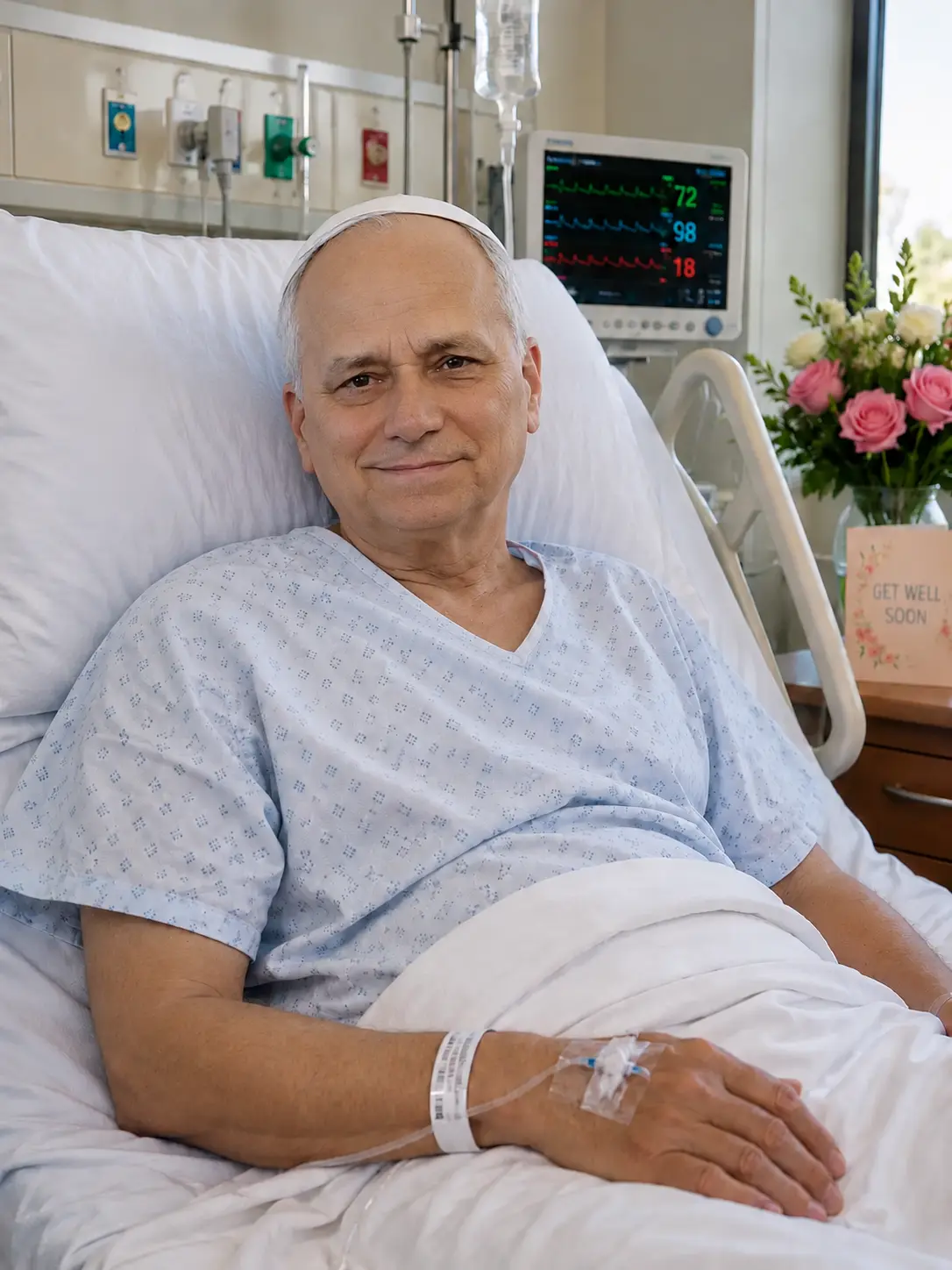
Those words, simple yet powerful, have resonated deeply across continents. Because for many, Pope Leo XIV is not only a leader—but a symbol of compassion, unity, and resilience in times of uncertainty.
Now, that same global community is responding.
Messages of prayer, hope, and encouragement have begun to pour in—from faith communities, world leaders, and individuals who have drawn strength from his words over the years. The tone is not one of fear, but of solidarity. A shared understanding that moments like this call for something deeper than concern—they call for presence.
For decades, Pope Leo XIV has stood as a voice of guidance, offering comfort in times of hardship and clarity in moments of doubt. His leadership has never been about authority alone—it has been about connection. About reaching people where they are, and reminding them that they are not alone.
And now, that message is returning to him.
Across the world, people are choosing to stand beside him—not physically, but spiritually. Through quiet reflection. Through prayer. Through simple acts of support that carry meaning far beyond words.
Because this moment is not just about recovery.
It is about faith.
Faith in healing.
Faith in strength.
Faith in the power of unity when it matters most.
While no detailed timeline has been given for his full return, one thing is clear: this is a journey that will require patience, resilience, and care. And in that journey, he will not walk alone.
The world is watching—not with expectation, but with respect. Not demanding answers, but offering hope.
Because sometimes, the most powerful response we can give is not urgency… but support.
Now is the moment for people everywhere to give back what he has given for so long—strength, compassion, and light.
And in that exchange, something meaningful is happening:
A reminder that even the strongest voices need support.
And that when they do… the world is capable of answering. 💖
Read more in the comments 👇

The possibility of a deeply personal message from Pope Leo XIV has drawn attention to something that transcends the daily responsibilities of the papacy: the human need for compassion, reassurance, and connection during moments of uncertainty.
For millions of Catholics, the pope is not simply the head of a religious institution. He represents spiritual continuity, moral guidance, and a visible connection to a worldwide community of faith. When questions arise about a pontiff's well-being, they naturally carry emotional significance for believers across different cultures and generations.
The circulating account describes a period of medical treatment followed by an encouraging message about healing and perseverance. However, it provides no authenticated medical bulletin, verified date of treatment, or official Vatican statement establishing that these events occurred.
The two quotations attributed to Pope Leo XIV are likewise unverified. Without a reliable source, they cannot responsibly be presented as his actual words.
Still, the themes expressed in the account—hope, resilience, and the importance of communal support—are closely connected to longstanding Christian teachings.
Born Robert Francis Prevost in Chicago in 1955, Pope Leo XIV was elected on May 8, 2025, becoming the first pope born in the United States. His election followed decades of religious service, including significant missionary and pastoral responsibilities in Peru.
His experiences across different communities helped shape an international perspective on the Church's mission and the challenges facing ordinary families.
As a priest, bishop, and later a senior Vatican official, he worked within a tradition that emphasizes spiritual accompaniment, particularly for people experiencing poverty, displacement, illness, and personal hardship.
This background provides an important context for understanding why messages associated with compassion and human vulnerability resonate so strongly with audiences interested in his pontificate.
The Catholic understanding of leadership extends beyond institutional authority. It includes a responsibility to serve, listen, and remain attentive to the needs of others.
The image of a spiritual leader acknowledging personal limitations can therefore carry considerable symbolic meaning.
In religious life, strength is not always understood as the absence of suffering. It may also involve recognizing dependence on others, accepting assistance, and continuing to act with hope despite uncertainty.
That perspective has deep roots in Christian spirituality.
Throughout the New Testament, believers are encouraged to support one another, share burdens, and respond to hardship with patience and compassion.
These principles help explain why prayer and solidarity are such familiar responses when a religious leader experiences a documented period of illness.
They also offer a meaningful framework for reflecting on the unverified recovery narrative involving Pope Leo XIV.
Medical recovery, when it occurs, is rarely defined by determination alone. It depends on the nature of the illness or procedure, appropriate clinical care, individual circumstances, and the body's response to treatment.
Emotional and spiritual support may contribute to a person's sense of comfort and connection, but they cannot substitute for professional medical treatment or establish a particular prognosis.
For that reason, stories about recovery should avoid suggesting that faith guarantees healing or that positive thinking determines medical outcomes.
A more responsible understanding recognizes that compassion matters regardless of whether recovery is rapid, prolonged, or uncertain.
This principle applies to prominent public figures just as it does to ordinary families.
When a person occupies a position of international religious significance, medical speculation can spread quickly. A single dramatic headline may prompt questions about public appearances, leadership responsibilities, and future engagements.
Yet the public importance of the papacy does not eliminate the need for accurate reporting.
The Holy See has established channels through which official information about papal activities and significant developments can be communicated. Such sources are particularly important when claims involve hospitalization, surgery, or an extended absence from public duties.
Without that confirmation, descriptions of a completed procedure or a prolonged recovery should remain clearly identified as unsubstantiated.
The same caution applies to reports of reactions from world leaders, religious communities, or international organizations.
Although expressions of goodwill toward the pope are entirely plausible, particular messages should not be attributed to named individuals or institutions without evidence.
Accuracy is not an obstacle to compassion. It is one of the ways compassion can be practiced.
When believers share an alarming story about a spiritual leader, they may be motivated by sincere concern. However, spreading unsupported medical information can create unnecessary anxiety and confusion.

Responsible communication allows people to express support without turning uncertainty into an invented crisis.
Beyond questions of verification, the story invites reflection on the relationship between leadership and vulnerability.
Modern public life often places enormous expectations on prominent figures. Leaders are expected to remain composed, energetic, and consistently available, even while managing demanding responsibilities.
The papacy is no exception.
A pope's schedule may involve liturgical celebrations, meetings with bishops, diplomatic audiences, administrative decisions, and encounters with visitors from around the world.
These duties require sustained attention and a willingness to engage with people facing vastly different circumstances.
Yet the Christian tradition repeatedly emphasizes that human dignity is not dependent on physical strength, productivity, or public achievement.
The elderly, the sick, and those requiring assistance retain the same fundamental worth as anyone else.
This understanding gives special importance to the Church's ministry to people experiencing illness.
Hospitals, charitable institutions, religious communities, and parish volunteers frequently provide practical and spiritual assistance to individuals facing difficult medical circumstances.
Their work often takes place quietly, without international attention.
A hospital chaplain offering a prayer, a volunteer accompanying an isolated patient, or a family member remaining beside a loved one can embody the values of solidarity that religious leaders regularly encourage.
Such actions demonstrate that compassion is not limited to public statements.
It is expressed through presence, patience, and the willingness to share another person's burden.
For Catholics who wish to pray for Pope Leo XIV, no unverified medical crisis is necessary to justify that intention.
Praying for the pope's health, wisdom, and strength is already part of the Church's spiritual tradition.
These prayers recognize the responsibilities carried by the pontiff and the importance of his ministry to the wider Catholic community.
They can also inspire believers to extend the same concern to people whose suffering receives far less attention.
Indeed, one of the most constructive responses to an emotionally powerful story is to consider how its underlying message might be translated into everyday action.
A person moved by a narrative about recovery might visit an elderly relative, support someone undergoing treatment, contribute to a hospital charity, or reach out to a friend experiencing isolation.
These gestures may seem small compared with the global visibility of the papacy, but their significance can be profound.
They transform sympathy into practical care.
Pope Leo XIV's role as a spiritual leader places him within a tradition that regards solidarity not merely as a feeling but as a responsibility.
That responsibility becomes especially important during periods of uncertainty, when fear can encourage speculation and dramatic narratives.
The account of his alleged recovery illustrates both the emotional appeal and the potential risks of such stories.
Its language conveys perseverance, gratitude, and the desire for companionship. Those are meaningful themes. But the narrative cannot establish that the pope underwent treatment, delivered the quoted message, or began a medically supervised recovery.
Until credible confirmation becomes available, those claims must remain unverified.
What can be affirmed is the enduring value of the principles they evoke.
Faith can inspire people to remain present during hardship. Hope can help communities confront uncertainty without surrendering compassion. Solidarity can remind individuals that their struggles need not be faced in isolation.
For a worldwide Church, these values extend far beyond the circumstances of any single leader.
They belong to families caring for sick relatives, healthcare professionals serving vulnerable patients, and communities supporting those who feel forgotten.
In the end, the most meaningful response to the circulating story is not to assume a medical outcome that has not been established.
It is to preserve the distinction between fact and speculation while embracing the broader call to kindness.
Whether Pope Leo XIV is addressing believers in St. Peter's Square or carrying out the ordinary responsibilities of his office, the spiritual significance of his leadership does not depend on a dramatic recovery narrative.
It rests in the enduring mission of faith, service, and human dignity.
And perhaps that is the message worth remembering most: genuine compassion does not require a sensational announcement.
It requires people willing to offer care, speak truthfully, and stand beside one another when support is needed.
In that spirit, hope becomes more than an emotion. It becomes a responsibility shared by everyone.